


The Operating System for Real Estate Development Finance, Forecasting & ESG Risk
Alasco is a cloud-based platform that has supported hundreds of real estate developers in managing complex financial workflows since 2018. It enables teams to handle real-time cost controlling, revenue tracking, cash-flow forecasting, and ESG risk management across the full property lifecycle.
Following the Series B, Alasco expanded its product focus beyond cost controlling. Recognizing that predictable revenue is the foundation of cash flow, a dedicated Revenues team was formed. I joined Alasco at that point and was assigned to this team to help complete the shift toward holistic project finance.
My team’s responsiblities covered:
The Problem SpaceDigitizing the old-fashioned construction industry
Main Causes Of Cost Overrun

No centralized file storage
Project data scattered across emails and outdated files.

Error-prone spreadsheets
Manual Excel workflows with no safeguards for critical financial data.

Missing approval workflows
Undigitzed invoice approval causing friction, delays, and poor documentation.
Alasco – A Single Source of Truth for Project Finance
Customers
+350
Company size
+100 employees (2022)
Alasco provides a system for managing construction project finances. It centralizes cost and revenue data, provides real-time performance visibility, and enforces controlled approval workflows – reducing risk and preventing cost overruns across the full project lifecycle.
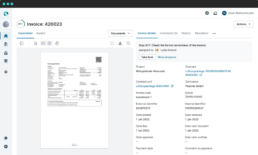
While my team didn’t develop this feature, I helped improve it through feedback.
This page helps users understand Alasco’s value, which is why I’m sharing it.
Case Study Focus
Rental Income & Cash Flow Forecasting
As Alasco pivoted toward project finance, I joined the newly formed ‘Revenues’ team to build our revenues features from scratch. This case study details how I translated fragmented customer feedback into a cohesive rental income module.
Situation
Real estate developers lack a single source of truth for rental income, leading to fractured financial forecasting in Alasco.
Pain points
- Forecasting Blind Spots: Income is tracked in external spreadsheets, not the platform.
- Operational Friction: Manual, unit-by-unit tracking is unscalable and error prone.
- Lack Of Oversight: Users lack a central overview to monitor payment status per unit.
Opportunity
How might we enable accurate, unit-level recording of rental income to automate forecasting and improve liquidity control?

Challenges
I’ve highlighted three hurdles identified during discovery. We stress-tested these concepts through prototype walk-throughs with five of our customers, ensuring our user flows accurately mapped to the complexities of tracking rent unit revenue on Alasco.

Challenge 1
Flexible Reporting for Stakeholders: Transforming Static Data into Actionable Reporting
The Problem:
Project managers need to report on specific fiscal periods, but a standard chronological list was useless for tracking „at-risk“ payments or future projections. A „one-size-fits-all“ view (e.g., Show last 6 months) failed because tenants in different lifecycles (Future vs. Past) had no relevant data to show.
The Solution:
I designed Context-Aware Defaults that replace static lists with Status-Based Anchors. The system detects the tenant’s state – shifting the default 6-month window to show „Planned“ months for new tenants or „Overdue“ months for active ones.
The Trade-off:
To meet a tight deadline, we deferred „Export as Excel.“ We pivoted to „On-Screen Reporting,“ making filters robust enough for project developers to present live in stakeholder meetings without needing a spreadsheet.

Challenge 2
Designing for the 5% (The Burden of Confirmation)
The Problem:
In user interviews, some customers shared a preference not to confirm every payment, as around 95% of tenants pay reliably. Instead, unpaid rents are typically flagged by property managers and only then recorded in the system.
The Solution:
Payment confirmation was made optional. Scheduled rents default to “auto-paid” and require user action only when discrepancies occur; confirming a payment upgrades the status to “paid,” making verification visible to all stakeholders. The system assumes success and highlights exceptions to keep cash-flow data accurate with minimal effort.
The Trade-off:
Automatic bank-based payment detection was explored with the API team but deprioritized. The approach introduced high technical complexity and numerous edge cases, and would have required customers to grant bank access through lengthy internal approval processes, with limited evidence of demand.

Challenge 3
Handling Edge Cases in Liquidity
The Problem:
Partial payments and late payment arrivals (the „5%“) destroy the accuracy and reliablity of cash flow forecasting.
The Solution:
I gave the user an option to overwrite the „Planned Date“ to „Actual Date.“ By allowing users to override the payment date and amount for outliers, the liquidity table remains a „source of truth“. Late payments would appear correctly in the cash flow table, in the correct corresponding month.
1,5 years at Alasco
Appreciation & Learnings
1,5 Years at Alasco

Systems over Pixels
Working with a mature Lean UX library taught me that a designer’s real value lies in workflow logic. I learned to favor speed and consistency by leveraging existing components rather than reinventing the wheel.

The Weight of Foundations
I gained a deep respect for foundational architecture. In B2B, I saw how early decisions ripple through the product’s future—learning to move thoughtfully when the cost of reverting a decision is high.

Mastering Alignment
I learned that alignment is a storytelling challenge. I used asynchronous video to „pitch“ new initiatives, creating a team ritual that built genuine excitement and clarity before a single pixel was moved.

Design Quality & Handoff
I realized that a seamless „go-live“ process is a prerequisite for great design outcomes. By treating documentation and QA as a core part of the craft, I helped turn our handoff into a predictable routine for the whole team.
Testimonies

Product Manager
I had the pleasure of working closely with Oliver in a cross-functional product development team, where he was our UX designer and I was the product manager. Together with our tech lead, we formed a tight-knit product trio, collaborating to identify the most impactful problems and develop viable, usable, and feasible solutions. Working with Oliver was not only efficient but also a continuous learning experience. His creative thinking and ability to conceptualize complex problems were impressive, and he consistently delivered outstanding UX and Ul designs.
In parallel to his regular work, Oliver took the initiative to drive side projects that significantly improved our team’s efficiency. He streamlined our quality assurance process and evaluated various localization solutions for our internationalization strategy, adding great value beyond his core responsibilities.
On a personal level, Oliver was a great bridge to our engineering squad, ensuring smooth communication and collaboration within our team. His positive attitude and strong work ethic made every project both enjoyable and productive. I highly recommend Oliver as an experienced designer and an invaluable partner in product development.


 Solar Consultant
 Technical Expert